Official Metin2 Won vs Private Server Yang: What Actually Changes?
Most Metin2 players have a preference — official servers or private. But the economic differences between the two rarely get discussed in any real depth. It’s not just a matter of server rules or drop rates. The way Won and Yang actually function, circulate, and lose value over time is genuinely different between the two environments.
If you’ve ever switched server types and felt like the economy worked differently, that’s because it does. And not just slightly.
The Basic Distinction Most Players Already Know
On official Metin2 servers, the primary trading currency is Won. On private servers, it’s Yang — though some private servers use their own named currencies or hybrid systems layered on top.
That part is common knowledge. What gets less attention is why this distinction produces such different economic behaviour in practice — and why experience on one server type doesn’t automatically carry over to the other.
Official Server Won: Slower Movement, Higher Entry Cost
Official servers attract a wide range of players — casual players, returning veterans, people who log in a few hours a week. The economy reflects that diversity. Trading volume is spread across a large player base. Item prices move slowly. A weapon listed at a certain Won value today will probably sit at a similar price next week, unless a major patch or event shifts the market.
That stability sounds like a good thing, and in some ways it is. But it comes with a structural cost: high-end gear on established servers is expensive precisely because stability preserves existing price levels. The supply of rare items doesn’t increase over time. The amount of Won in circulation does — slowly, steadily, as players farm and trade. More Won chasing the same pool of rare items means prices only move in one direction over the long run.
On a server like Germania or Teutonia, this effect has been compounding for years. The market isn’t broken — it’s just expensive in the way any mature economy is expensive. Players who have been there from the beginning built their wealth during a period when prices were lower. Players entering now are buying into a market that has already moved on.
The gear gap on official servers is also real and slow to close. Guild wars and PvP content on competitive servers like Ruby Chimera or Tigerghost create steady, sustained Won demand — not short bursts, but consistent pressure across months. Players upgrading for PvP aren’t doing it once. They’re doing it continuously as the meta shifts and their guild’s needs evolve.
Private Server Yang: Faster Everything — Including Inflation
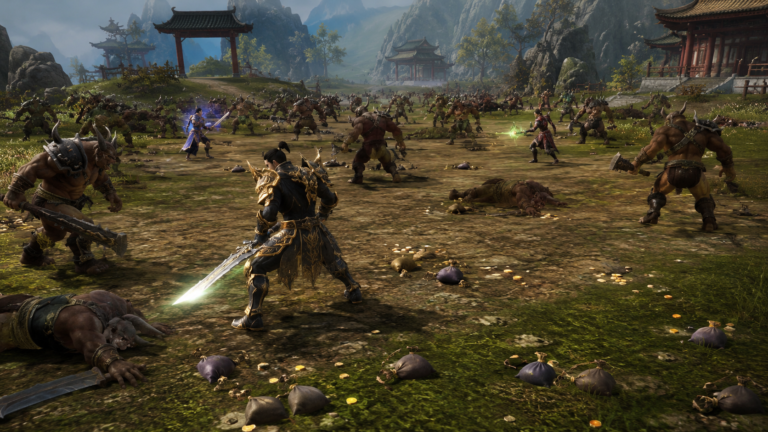
Private servers move faster. Higher drop rates, quicker levelling, more frequent events. The Yang economy moves accordingly — and the difference is most visible when you compare launch phase to a few months in.
In the first weeks of a private server, the economy is genuinely open. Players are actively farming, items are in circulation, and demand is spread across a large pool of gear at different tiers. This is usually the most accessible window to enter — gear is relatively affordable, competition exists but isn’t consolidated yet, and the market has liquidity at most price points.
That window closes. Within two to three months, a smaller group of players has accumulated significantly more Yang and rare items than everyone else. They got there first. They farmed through the launch period when drop rates felt rewarding. Now they control the supply of the items most people want. Prices on high-end gear climb. Farming income stays roughly constant. The gap between what you can earn and what you actually need widens.
It’s the same inflation curve that official servers go through — just compressed from years into months.
Why Yang and Won Don’t Behave the Same Way
The speed difference is obvious. The structural differences are worth understanding too.
Official servers follow a developer-managed update and patch schedule. Content arrives at a controlled pace. This means the economy rarely gets disrupted by a single change overnight. Players can make long-term decisions about gear investment because the rules stay relatively consistent.
Private servers are managed by independent teams. The best ones run stable, well-maintained economies for years. Others introduce changes that shift Yang value significantly in a short time — a new farming area, a rebalanced drop table, a crafting system that suddenly absorbs or generates large amounts of currency. These changes aren’t always announced in advance, and their economic impact isn’t always predictable.
That volatility isn’t inherently bad. A lot of players prefer it. But it’s worth going in with eyes open, especially if you’re investing serious time in a character.
Players comparing both environments can also browse current official server Won options and private server Yang options side by side to see which markets are currently active.
The Reset Risk
This one gets underplayed, but it matters.
Private servers close. Some run for six months. Some last five years or more. The difference between a server with a proven track record and a newer one still building its player base isn’t just about stability — it’s about how seriously players treat the currency on that server.
When a private server shuts down, everything accumulated on it disappears. Yang, items, progression — gone. This creates a fundamentally different relationship with currency than official servers, where there’s no equivalent closure risk. Official servers occasionally merge or undergo significant changes, but an outright shutdown is rare.
Long-running private servers like Shiva or Celestial World Lagerscheine carry more weight in the community partly for this reason. Longevity is a signal. A server that has been running for years has already demonstrated that it can hold a player base, manage its economy, and survive the natural decline that ends most private servers early.
PvP and Guild Pressure: Where the Two Economies Diverge Most
The sharpest point of difference between official and private server economies shows up around competitive play.
On official servers, guild wars and PvP create steady, long-term Won demand. Upgrading is a months-long process. The pressure is real but it’s spread out — most active players can keep up if they’re consistent.
On private servers with active PvP scenes, things accelerate. When a guild decides to push for dominance, Yang starts moving in volume. A practical example: a guild preparing for a war might spend several sessions bulk-buying +9 upgrade stones, running mass crafting on armors, and coordinating farm rotations to rebuild their stockpile between wars. That kind of concentrated buying pressure can move prices across the entire server market within days — not weeks.
Players outside that competition feel it. Upgrade materials that were affordable last week are now listed at a premium. For players who aren’t in a top guild but also aren’t purely casual, this is often the point where farming Yang themselves stops making sense. The volume required to stay competitive just isn’t reachable through farming alone at a normal pace.
Which Is Better?
Neither, in an absolute sense.
Official servers offer stability, predictable economics, and no server closure risk. They suit players who want to invest in a character over a long period without worrying about their server disappearing.
Private servers offer faster progression, more frequent changes, and often a more active PvP scene. The economy is more volatile — which for a certain kind of player is the point, not a drawback.
What both have in common: the longer you’re away from either type, the harder re-entry gets. The economy doesn’t pause while you’re gone.
Closing Thought
Won and Yang are both just numbers on a screen until you understand what drives them. The mechanics behind official and private server economies are different enough that experience on one doesn’t automatically transfer to the other.
If you’re switching server types, expect an adjustment period — not just for gameplay, but for how the market actually works.
FAQ
Is Won worth more than Yang?
They’re not directly comparable — they exist on entirely separate servers with separate economies. Won value varies between official servers, Yang value varies between private servers. What matters is what each unit buys within its own market, not how they compare across server types.
Why do some private server economies feel more stable than others?
Server age and management quality are the biggest factors. A private server that has been running for years with consistent updates develops more predictable market behaviour than a newer one still finding its footing. Active player population matters too — more traders means more liquidity and less erratic pricing.
Do events affect official and private server economies differently?
Yes. Official server events follow a developer schedule that experienced players can anticipate. Private server events are often less predictable — which makes timing harder but also creates windows of opportunity for players who are paying attention when prices shift.
Can Yang from one private server be used on another?
No. Each private server has its own isolated economy. Yang earned or purchased on one server has no value anywhere else.
Why does high-end gear cost so much Won on established official servers?
Because the supply of rare items doesn’t grow over time, but the Won in circulation does. More currency chasing the same pool of rare gear means prices only move upward as the server ages. On long-running servers like Germania or Teutonia, this dynamic has been building for years.