How Server Population Changes Metin2 Yang and Won Prices
You have probably felt it without being able to name it. Items sitting in your shop for days without a sale. The market looking thin — the same few listings that have been there for a week. Yang in your inventory that technically has value but nothing worth buying with it. That feeling usually is not about the economy in some abstract sense. It is about population. How many active players are actually on your server shapes what Yang and Won are worth day to day, often more than anything else.
More Players Means a More Functional Market
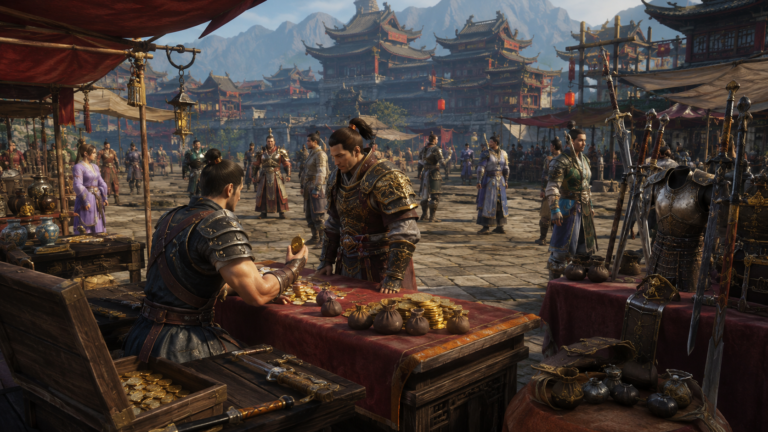
When a server has a healthy active population, the market works the way it is supposed to. Items have consistent buyers and sellers. You can list something and expect it to sell within a reasonable time. You can buy most things you need without waiting for a rare listing to appear.
When that population drops, the market thins. The same items still exist. The same players still have Yang. But fewer people are checking listings, fewer are actively selling, and fewer are buying. Items sit. Prices get inconsistent because individual transactions have a bigger effect on what “market price” looks like when there are only a handful of sellers active at any given time.
This is what players on declining servers usually describe as the market feeling “dead” — not because Yang lost its value overnight, but because the network of buyers and sellers needed to make it functional has gotten too small to work reliably.
High Population Does Not Always Mean Better Prices for Sellers
More players means more buyers, but it also means more competition from other sellers. On high-population servers like Ruby Kirin or Romania, you can sell almost anything — the market is deep and transactions happen quickly. But commonly farmed items stay cheap because there are always multiple players supplying the same drops at the same time.
The tradeoff is predictability. High-population markets move gradually and are easier to read. Low-population markets can have higher prices on specific items but slower sales, wider price swings, and more days where the item you want simply is not listed by anyone.
Small Servers Have Their Own Economic Logic
Small private servers with stable communities develop a different kind of economy. Each player represents a bigger slice of the market. A single active guild can meaningfully move prices on specific item categories. Items that would be common on a large server can be genuinely scarce simply because fewer players are farming them.
In that environment, Yang can feel more valuable per unit — there is less of it competing for the same items, and there are fewer sellers anchoring prices down through volume. But the same thing that creates that dynamic also creates the downside: lower liquidity means slower sales, and price discovery is less reliable when any single transaction can visibly shift what “the price” is.
Servers like Projekt Hard or Metin 2009 operate in this kind of environment — active enough to have a real economy, concentrated enough that individual behavior has visible market impact. Players who treat them like high-population official servers tend to get the wrong read on how pricing works there.
What Actually Happens When Population Falls Too Far
This is the part worth understanding in detail, because a lot of players end up stuck on servers in this situation without realizing it until they have already invested significant time.
When a server population drops below a certain threshold, specific market functions start breaking down one by one. Crafting that requires multiple players with different setups stops being viable. High-end items stop appearing on the market — not because they do not exist, but because the players who have them are not active anymore. Mid-tier items accumulate in unsold listings because the buyers who used to absorb them have left.
Yang does not inflate on a dead server. It stagnates. You can have a lot of it and still not be able to buy what you need — not because prices are too high, but because the supply side of the market has dried up. There is nobody selling the item you want at any price.
The result is a currency that technically retains its nominal value but loses practical utility. Yang is only worth what you can spend it on. On a server where the market has collapsed, the answer to that question gets narrower every week.
Signs Worth Checking Before Committing to a Server
If you are deciding whether a server’s economy is worth investing in, a few things are worth checking before you are too deep in:
- How fast do common items sell after listing? Slow sales on everyday items suggest low active buyer count.
- Are high-end items listed consistently? If they appear and disappear unpredictably, the server may not have enough consistent active sellers.
- How many players are visible at different times of day? A server that is only active in a narrow window creates market gaps the rest of the time.
- Is there visible guild activity? Guilds drive a significant portion of market demand. A server without active guild competition is missing one of its main economic engines.
- Are upgrade material prices stable or swinging wildly? Wide swings with no obvious cause often mean too few sellers are anchoring the market.
None of these signals are definitive alone. Together they give a reasonable read on whether the economy has the population base to function over time — or whether it is already past the point where committing makes sense.
Closing Thought
Population is the variable behind a lot of Metin2 market behavior that seems random. Items that will not sell, Yang that feels useless, prices that swing for no obvious reason — these usually trace back to how many active players are actually participating in the economy, not to anything broken with the game itself.
The servers listed on SafeYangStore’s private server page and official server page tend to be the ones with enough active economies to be worth tracking. Servers that have gone quiet do not stay in stock for long.
FAQ
How does server population affect Yang and Won prices?
Population determines how many active buyers and sellers are in the market at any time. More players means more consistent pricing and faster transactions, but also more supply pressure on commonly farmed items. Fewer players means slower sales, wider price swings, and items that are harder to buy or sell even at prices that seem reasonable.
Why do items sometimes feel impossible to sell even at low prices?
Usually a buyer population problem. If active player count has dropped enough, lowering your price does not fix the issue — there simply are not enough players checking the market to move the item. The demand is not there regardless of what you list it for.
Can a small server have a decent economy?
Yes, if the community is stable and consistently active. Small servers can have tighter, more interesting economies than large ones — specific items are genuinely scarcer, individual players have more market influence, and Yang can feel more useful per unit. The tradeoff is lower transaction speed and less reliable pricing day to day.
What are the signs that a server’s economy is declining?
Slower item sales at unchanged prices, fewer consistent listings in high-end categories, wider price swings on items that used to be stable, and less visible guild activity are the most reliable signals. Market gaps — entire categories of items that simply stop being listed — are the clearest sign that the supply side is thinning out.
Does population affect official and private servers differently?
Yes. Official servers generally have larger baseline populations and decline more slowly. Private servers can gain and lose players faster, which means economic effects of population changes hit more immediately and more visibly. A meaningful population drop on a small private server is a much bigger market event than the same percentage drop on a large official server.